In the high-precision world of modern manufacturing, the demand for efficiency, structural integrity, and material economy has driven the industry toward advanced metalworking processes. Among these, cold forming technologies stand out as a revolutionary approach to shaping metal. Unlike traditional hot forging or casting, which rely on extreme heat to make metal pliable, cold forming manipulates material at or near room temperature.
At its core, cold forming is a process where metal is shaped through mechanical force rather than thermal softening. The technology encompasses a variety of methods, including cold heading, cold drawing, and most notably, cold roll forming.
The science behind this process is fascinating: when metal is deformed below its recrystallization temperature, it undergoes a phenomenon known as strain hardening or work hardening. This actually increases the yield and tensile strength of the material, resulting in a finished product that is often stronger than the original raw material. This inherent strengthening allows manufacturers to use thinner gauges of metal to achieve the same structural requirements, leading to significant weight and cost savings.
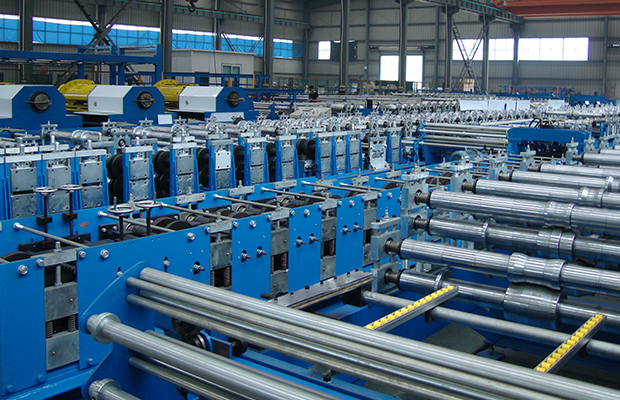
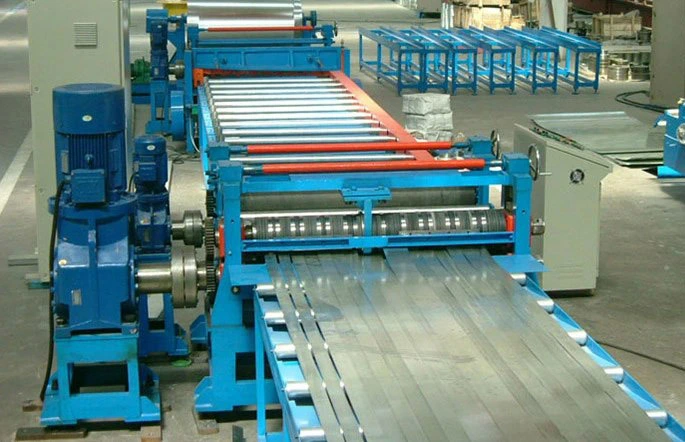
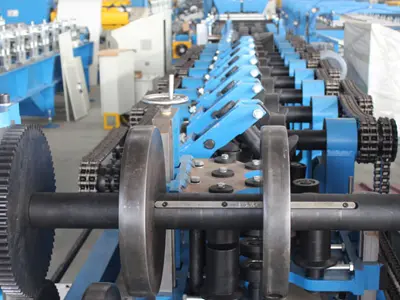
Among the various cold forming methods, cold roll forming is perhaps the most versatile for high-volume production. This process involves a continuous bending operation where a long strip of metal, typically coiled steel, is passed through a series of rollers. Each set of rollers performs an incremental part of the bend until the desired cross-sectional profile is achieved.
The beauty of cold roll forming lies in its consistency. Whether producing simple C-channels or complex, multi-hollow profiles, the process ensures that the cross-section remains uniform throughout the entire length of the piece. This makes it an ideal solution for industries like construction, automotive, and logistics, where precision and repeatability are non-negotiable.
To achieve the tight tolerances required in modern engineering, the quality of the machinery used is just as important as the technology itself. Manufacturers seeking to optimize their production lines look for equipment that can handle diverse materials while maintaining high speeds.
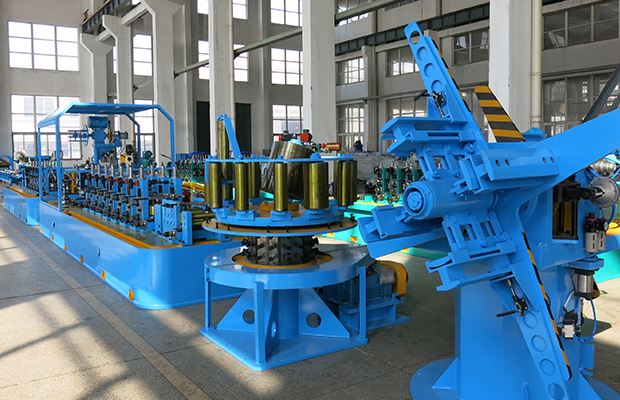
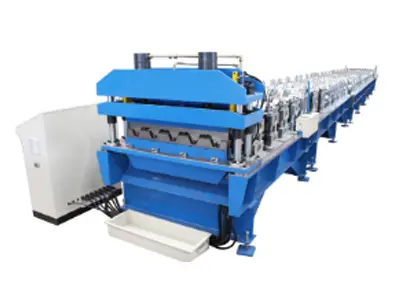
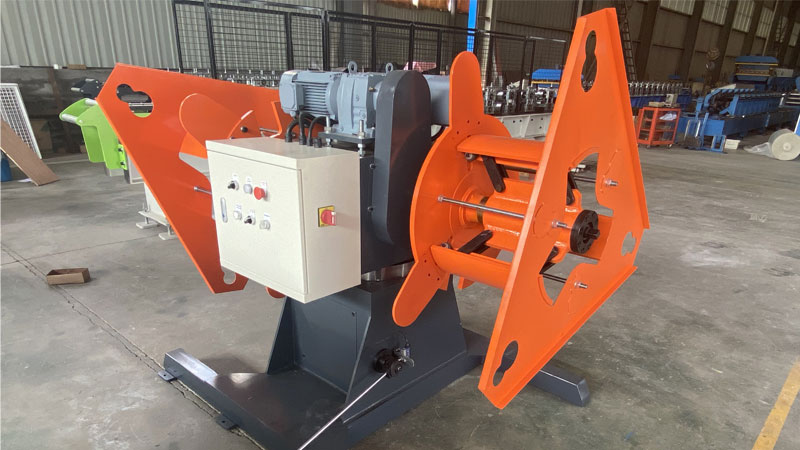
Hangzhou Roll Forming has established itself as a leader in this field, providing state-of-the-art roll forming machines designed to meet the rigorous demands of global infrastructure. The cold roll forming equipment is engineered to handle various metals, including galvanized steel, aluminum, and high-strength alloys, ensuring that the cold forming process is executed with surgical precision. By integrating advanced automation and high-quality roller dies, their machines minimize material waste and maximize throughput, embodying the core values of cold forming technology.
The adoption of cold forming technologies offers several distinct advantages over hot-working alternatives:
Superior Surface Finish: Because the metal is not heated, there is no formation of oxide layers. This results in a smooth, clean surface finish that is often ready for painting or plating without additional treatment.
Dimensional Accuracy: Cold-formed parts exhibit exceptional dimensional stability. Since there is no cooling-related contraction, which occurs in hot forming, the final dimensions are much easier to control.
Energy Efficiency: Eliminating the need for industrial furnaces significantly reduces energy consumption, making cold forming a more sustainable choice for the environmentally conscious manufacturer.
Material Savings: Cold forming processes are generally near-net-shape, meaning they produce very little scrap material compared to subtractive manufacturing methods like machining.
Precision in cold forming is about measurement. Metrology plays a critical role in monitoring the springback effect—a common challenge in cold forming where the metal slightly returns to its original shape after being bent. High-tech sensors and 3D measuring systems are used to calibrate roll forming machines in real-time, ensuring that every profile produced meets the exact specifications of the CAD design.
The versatility of cold-formed profiles is evident in everyday life.
In the automotive industry, cold-formed components are used for seat rails, bumpers, and chassis parts, where high strength-to-weight ratios are critical for fuel efficiency and safety.
In construction, the technology produces the purlins, studs, and roof panels that form the skeletons of modern warehouses and residential buildings.
The solar energy sector relies heavily on cold roll forming for the production of mounting structures and tracking rails. These components must withstand decades of environmental exposure, making the durability and corrosion resistance of cold-formed, galvanized steel the perfect choice.
Cold forming technologies represent the perfect intersection of physics and mechanical engineering. By leveraging the natural properties of metal and applying precise mechanical force, manufacturers can create components that are stronger, lighter, and more cost-effective.
As industries move toward more automated and sustainable production models, the role of specialized equipment providers becomes even more vital. Companies like Hangzhou Roll Forming are at the forefront of this evolution, offering the roll forming machines necessary to turn raw metal coils into the building blocks of the future. Whether it is for a skyscraper, a vehicle, or a renewable energy project, cold forming technology continues to shape the world around us with unparalleled efficiency and strength.