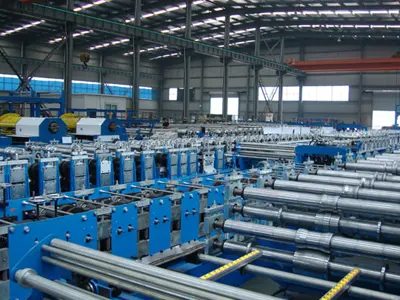
The downspout forming machine has become a crucial piece of equipment in the manufacturing of rainwater drainage systems. This machinery is designed to efficiently produce downspouts, which are an essential component of rainwater management systems in residential, commercial, and industrial buildings. The downspout's primary function is to direct rainwater from the roof to the ground, preventing damage to the building's foundation and ensuring the longevity of the structure. With the advent of advanced forming technology, the downspout forming machine plays an increasingly important role in providing high-quality, custom-made downspouts for a wide range of applications.
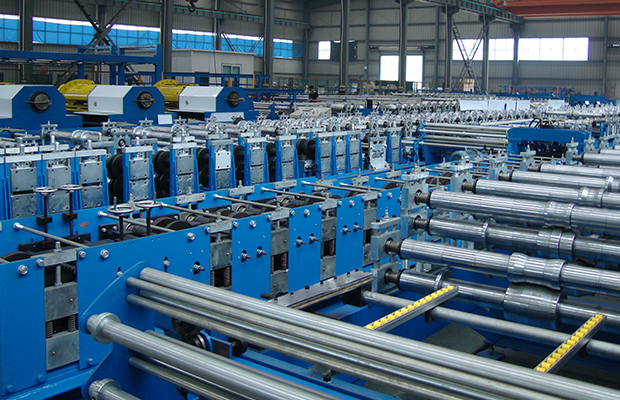
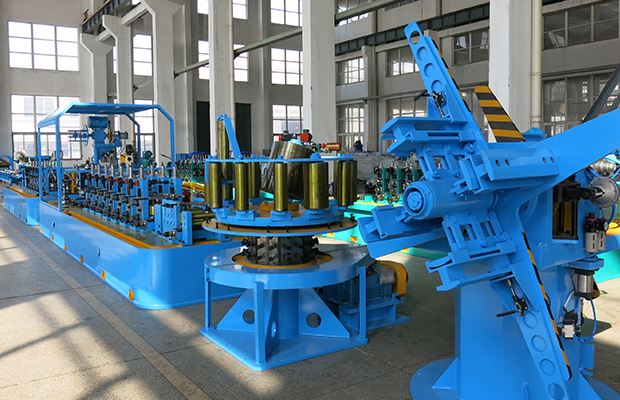
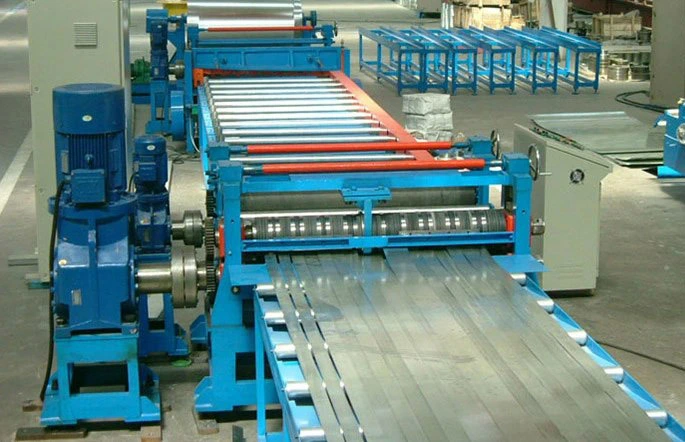
The downspout forming machine offers a highly efficient and precise way to produce downspouts. By utilizing an automated system, the machine is able to quickly shape metal coils into accurately formed downspouts. The process starts with uncoiling the metal and feeding it into the machine, where rollers gradually bend and shape the metal to the required dimensions. This level of automation significantly reduces the need for manual labor, thereby speeding up production and reducing costs. With the ability to produce large volumes of downspouts in a short period of time, manufacturers can meet the demands of even the most extensive construction projects.
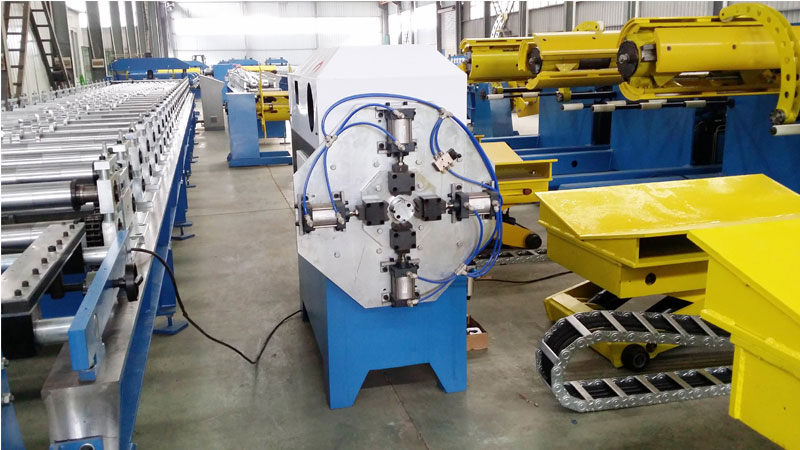
While downspouts are commonly used in residential buildings, they are also essential in larger commercial and industrial facilities. The downspout forming machine is versatile enough to produce downspouts in a variety of shapes, sizes, and materials to meet the specific needs of different industries. In residential construction, downspouts are generally smaller and designed to complement the aesthetic of the home. In contrast, commercial and industrial facilities require more robust and larger downspouts that can handle significant amounts of water runoff.
For instance, in commercial buildings like shopping malls, offices, and warehouses, the downspout forming machine can be used to create downspouts capable of managing higher volumes of rainwater. This is especially important in regions with heavy rainfall or where stormwater runoff poses a risk to the building's structural integrity. Similarly, in industrial applications, specialized downspouts can be produced to accommodate unique environmental conditions or specific structural designs.
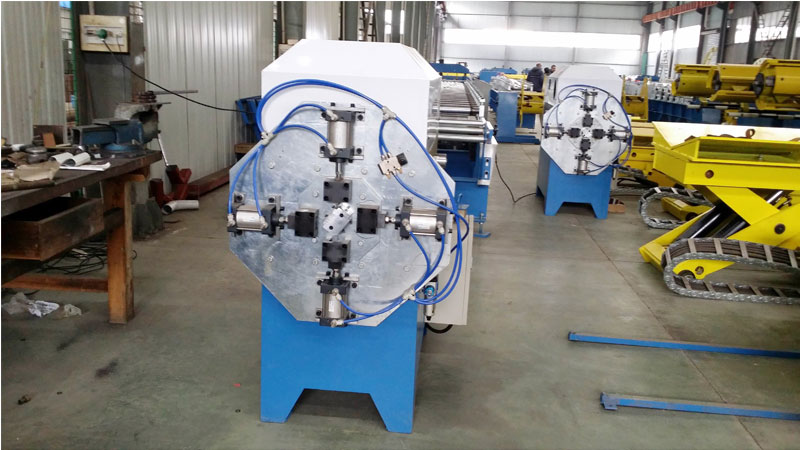
Before the introduction of the downspout forming machine, downspouts were often produced manually, with workers bending and shaping the metal by hand. While this method allowed for custom designs, it was time-consuming and prone to human error. Each downspout required significant manual labor, making the production process slower and less cost-effective.
In comparison, the downspout forming machine offers automated production, which dramatically improves efficiency and accuracy. The machine can process large volumes of material quickly and with a high degree of precision, ensuring that each downspout meets the required specifications. Additionally, the machine can be easily adjusted to accommodate different designs and sizes, offering flexibility for manufacturers. The time saved in production translates to reduced labor costs, and the consistency in product quality enhances the overall reliability of the rainwater drainage system.
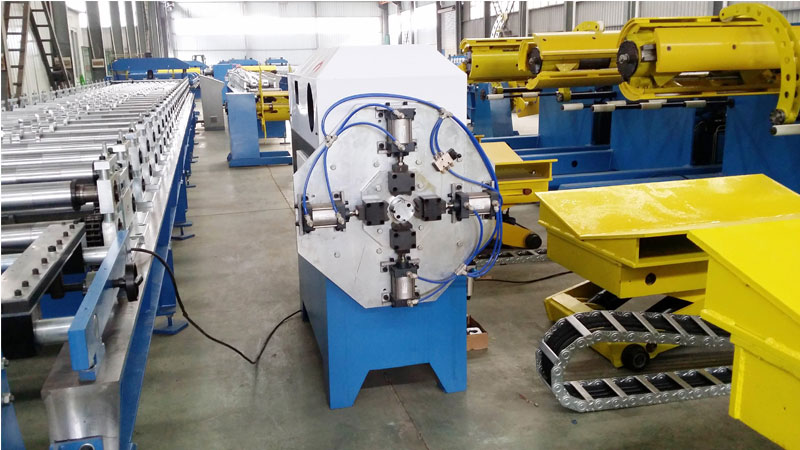
Another significant benefit of the downspout forming machine is its adaptability to custom designs. Many construction projects require unique downspouts to match the building's architectural style or specific drainage needs. The machine can be adjusted to create downspouts of varying dimensions, profiles, and materials, allowing manufacturers to provide tailored solutions for each project.
The ability to produce custom downspouts efficiently is essential in industries where design flexibility is a priority. For example, buildings with complex roof structures or unique aesthetic requirements may require custom-shaped downspouts that blend seamlessly with the overall design. The downspout forming machine can accommodate these requirements without compromising on production speed or quality. Additionally, the machine can handle various materials such as steel, aluminum, and copper, providing further versatility in design options.
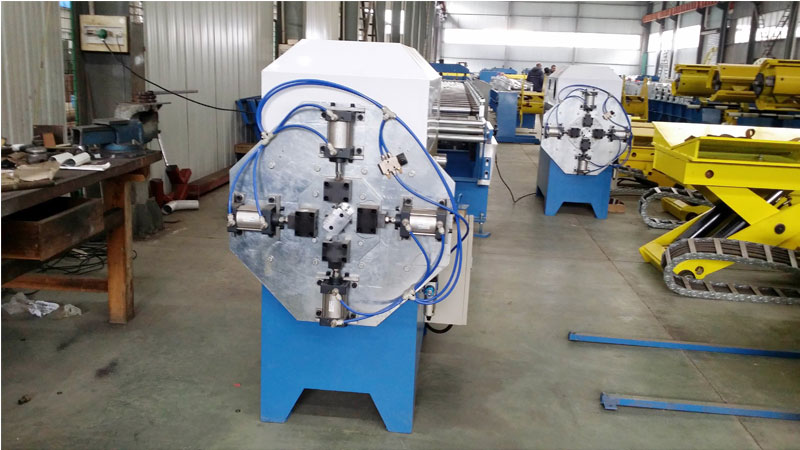
Durability is another critical factor in the performance of downspouts, especially in regions prone to heavy rain or extreme weather conditions. The downspout forming machine ensures that each downspout is made to withstand these challenges. By using high-quality materials and automated production techniques, the machine produces downspouts that are durable and long-lasting. In addition to ensuring structural integrity, the machine allows for surface treatments such as coating or painting, which further enhances the longevity of the downspouts and protects them from corrosion and wear over time.
In conclusion, the downspout forming machine has revolutionized the manufacturing of downspouts, offering significant advantages in terms of efficiency, precision, and customization. From residential buildings to large commercial and industrial projects, this machine is integral in creating reliable rainwater drainage systems. Its ability to handle large-scale production while maintaining high standards of quality makes it an indispensable tool in modern construction. As the demand for more advanced and customizable drainage solutions continues to grow, the downspout forming machine will undoubtedly remain a vital component in meeting these needs.